
SEW
FRISCO
.png)
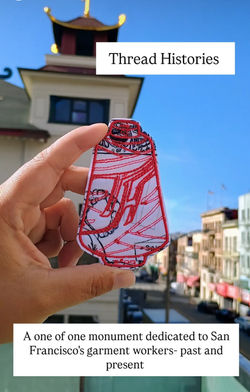
Monument dedicated to the Garment Workers of San Francisco, CA

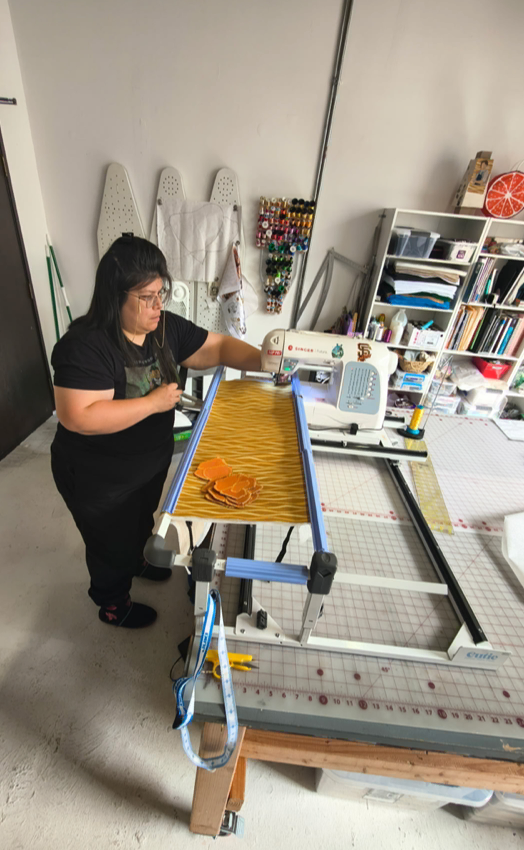

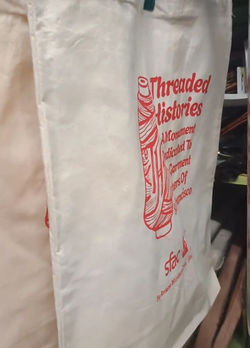
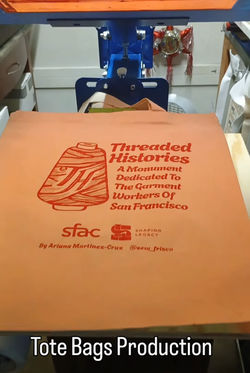
Threaded Histories is a temporary public art project that reimagines monuments and memorials through textiles, embroidery, and community storytelling.
Rooted in the rich cultural fabric of San Francisco’s Garment District, the project honors the unsung heroes, everyday workers, and cultural contributors whose labor and stories have shaped the city but are often absent from traditional public memory.

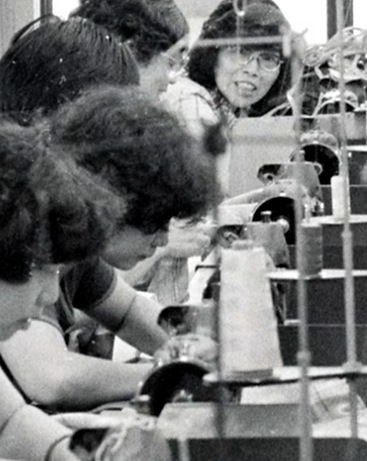
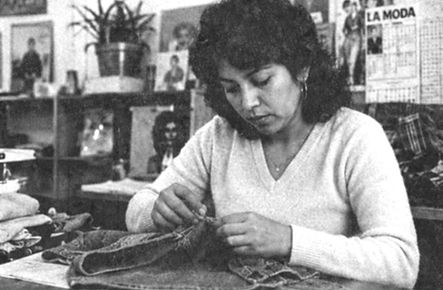
At its core, Threaded Histories highlights the intertwined histories, resilience, and contributions of San Francisco’s Latino and Chinese garment workers, whose labor helped shape the city’s cultural and economic identity.
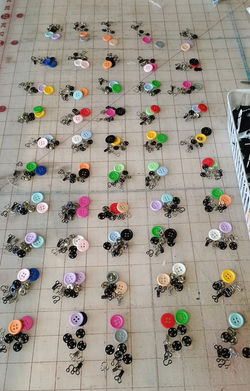
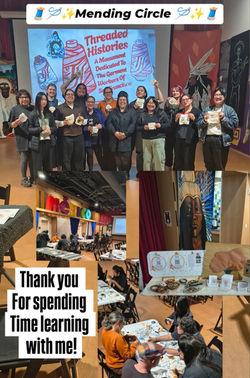
Developed through the San Francisco Arts Commission’s Shaping Legacy initiative, Threaded Histories extends beyond a central monument to invite participation through a Community Archive, Public Workshops with Physical Takeaways and Historical context that celebrate shared histories, labor, and cross-cultural exchange.

Monument
Inspiration:
Located inside Rose Pak Chinatown subway BART station, rather than grand statues or stone structures, Threaded Histories is a living, collaborative, and ephemeral memorial using hand-embroidered textile panels and fabric. It illustrates important cultural movements and people that shaped the expectations of what unions for garment workers look like and the impact of coming together across different backgrounds to fight injustice.



A 5% wage increase
A 40-hour work week
Improved workplace safety and labor protections


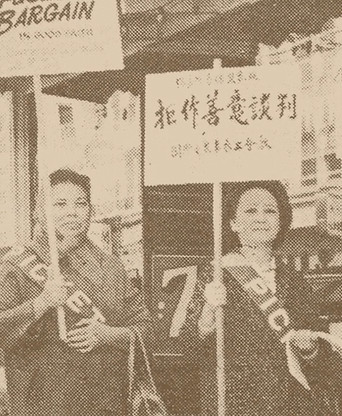

1938 National Dollar Stores Strike
After factory owners attempted to evade a newly negotiated labor agreement, 108 garment workers, primarily Chinese immigrant women, launched a 105-day strike from February 26 to June 10, 1938. Widely recognized as the first Chinese immigrant labor strike in U.S. history, workers successfully secured:
Led by organizers such as Sue Ko Lee, the strike became a defining moment in Asian American labor history and demonstrated remarkable community solidarity, with many Chinatown residents honoring the picket line by refusing to shop at National Dollar Stores.
Yet the struggle continued. After only one year under a union contract, officials at Golden Gate Manufacturing announced the factory’s closure. Oral histories describe efforts to place unemployed Chinese garment workers into previously all-white factories, opening new opportunities despite ongoing discrimination. Although Local 341 later merged with another garment workers local following the closure, its legacy endured: the strike proved that Chinese garment workers could successfully organize and laid the foundation for future labor alliances and immigrant worker activism in San Francisco.

Community Archive
Through a community survey, people have shared experiences of mothers, grandmothers, and relatives who worked in factories or sewed from home for their families and companies like Levi’s, across San Francisco.

These stories reveal themes of resilience, migration, and adaptation, honoring the experiences of newcomers to the United States whose labor and care helped shape the cultural fabric of San Francisco.


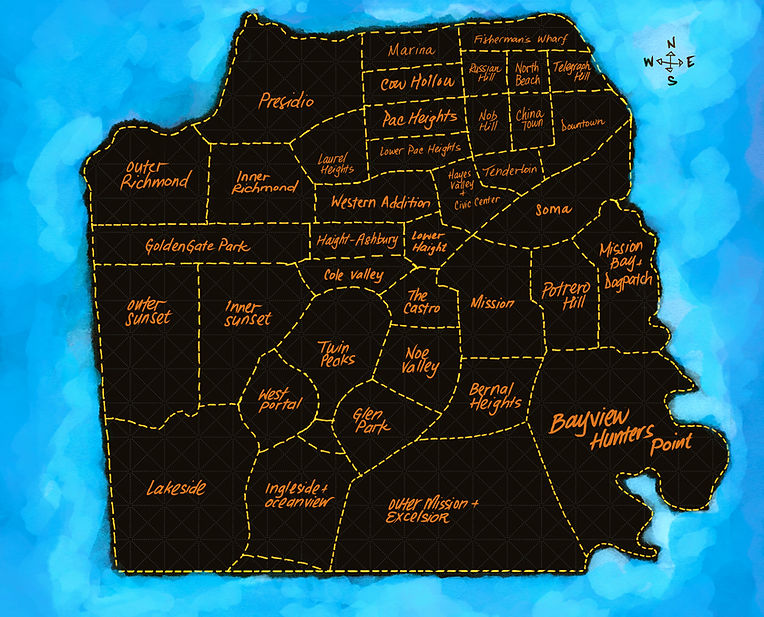
A guide to some of the places that shaped San Francisco’s garment industry, highlighting the labor and cultural contributions of garment workers.

Map:
Garment Industry
of San Francisco
1. NORTH WATERFRONT
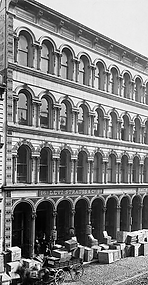
Levi's Plaza -
1155 Battery St.
Once home to manufacturing facilities that operated in San Francisco from 1906 - 2002, Levi Strauss became one of the city’s most influential garment companies. Today, the plaza houses the Americas headquarters of Levi’s, serving as a reminder of San Francisco’s long relationship to clothing production and industrial labor.

2. SOMA & SOUTHEAST WATERFRONT
Crane Cove Park
Located along San Francisco’s southeastern waterfront, this area reflects the city’s former industrial backbone. Before waves of redevelopment, nearby warehouses and factories supported garment manufacturing and shipping networks that connected workers to production across the city
Jessica McClintock Warehouse
A reminder of San Francisco’s once-thriving fashion production economy. The designer’s warehouse symbolizes a period when apparel manufacturing remained deeply tied to the city before much of the industry relocated overseas.
3. THE MISSION DISTRICT
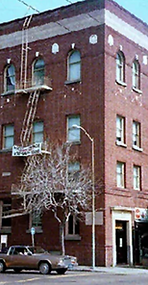
Redstone Labor Temple -
2940 16th St. at Capp
A reminder of San Francisco’s once-thriving fashion production economy. The designer’s warehouse symbolizes a period when apparel manufacturing remained deeply tied to the city before much of the industry relocated overseas.

4. CHINATOWN
Golden Gate Manufacturing Co. -
720 Washington St. (Currently Buddha Universal Church)
This site became the birthplace of Local 341, the first Chinese trade union local in American history. Organized in 1937 by Chinese women garment workers under the International Ladies’ Garment Workers’ Union (ILGWU), the union emerged to challenge sweatshop conditions, wage inequities, and labor exploitation in Chinatown’s garment industry.
Rose Pak Muni Metro Station - 935 Stockton St.
The Chinatown, Rose Pak Muni Metro Station, located at Stockton and Washington Streets, connects Chinatown to San Francisco’s broader transit network. The station honors Rose Pak, a prominent Chinese American community activist and longtime advocate for Chinatown who championed the Central Subway project. During construction, workers uncovered 19th-century sewing machines, a striking reminder of Chinatown’s long history as a center for garment production and labor.
Jung Sai factory - 646 Washington St.
1974 Jung Sai Garment Workers Strike: Garment workers at the Jung Sai factory, contracted by Esprit de Corps, launched a strike demanding fair labor conditions. The protest continued Chinatown’s legacy of garment worker organizing decades after Local 341’s formation.
Portsmouth Square
A longtime gathering place tied to labor organizing in Chinatown. Nearby sites hosted meetings connected to Local 341, and the square became part of the social geography surrounding garment worker activism and community solidarity.





for more on research and image resources
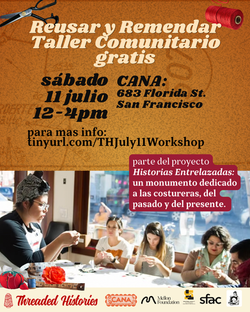
Public Workshops
 |  |  |  |
|---|---|---|---|
 |  |  |  |
 |  |  |  |
 |  |  |  |
 |
